
Table of Contents
- 1. Introduction: The Future of Battery Management
- 2. What is a Smart Battery Hub?
- 3. The 3-in-1 Advantage of the Ostation 2 Series
- 4. Technical Specifications and Performance
- 5. Storage Capacity and Organization
- 6. Intelligent Charging and Safety Features
- 7. Ostation 2 vs. Ostation 2 Pro: Choosing the Right Model
- 8. Practical Applications for Canadian Outdoor Enthusiasts
- 9. Sustainability and Long-Term Cost Savings
- 10. Conclusion: Upgrading Your Energy Infrastructure
Introduction: The Future of Battery Management
Managing household power requires more than just a drawer full of loose alkaline cells. As we approach 2026, the demand for sustainable and efficient energy solutions continues to accelerate. Traditional battery chargers often present several frustrations: tangled cables, slow charging speeds, and no clear way to distinguish between charged and depleted batteries.
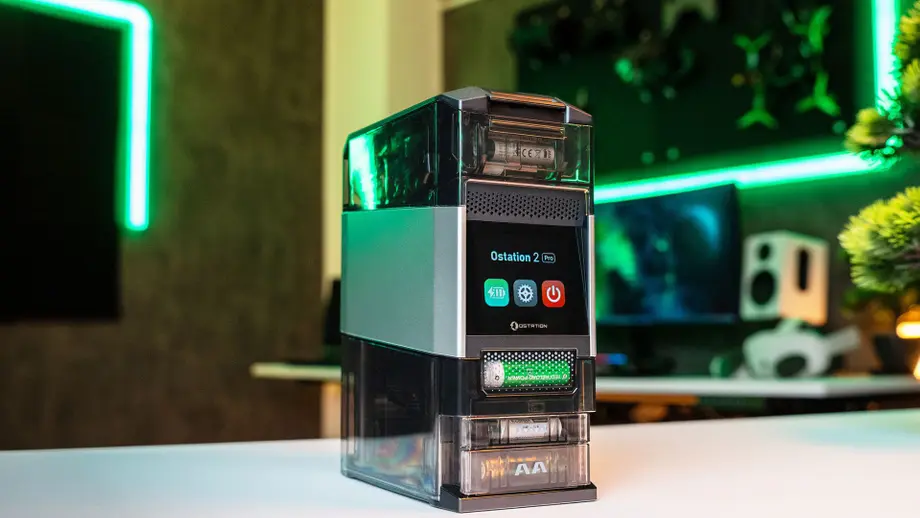
The Ostation 2 Rechargeable Battery Station addresses these pain points directly. This Smart Battery Hub represents a significant shift in how we manage AA and AAA power. It is not merely a peripheral device but a centralized station designed to organize, charge, and dispense batteries on demand. For users who rely on high-drain devices—from GPS units to professional-grade flashlights—this technology streamlines the transition from disposable to rechargeable ecosystems.
What is a Smart Battery Hub?
A Smart Battery Hub differs from a standard charger by integrating high-capacity storage with logic-based power management. Conventional chargers usually require manual insertion and removal of batteries from specific slots, creating a workflow bottleneck and "charging clutter" on your desk or workshop bench.
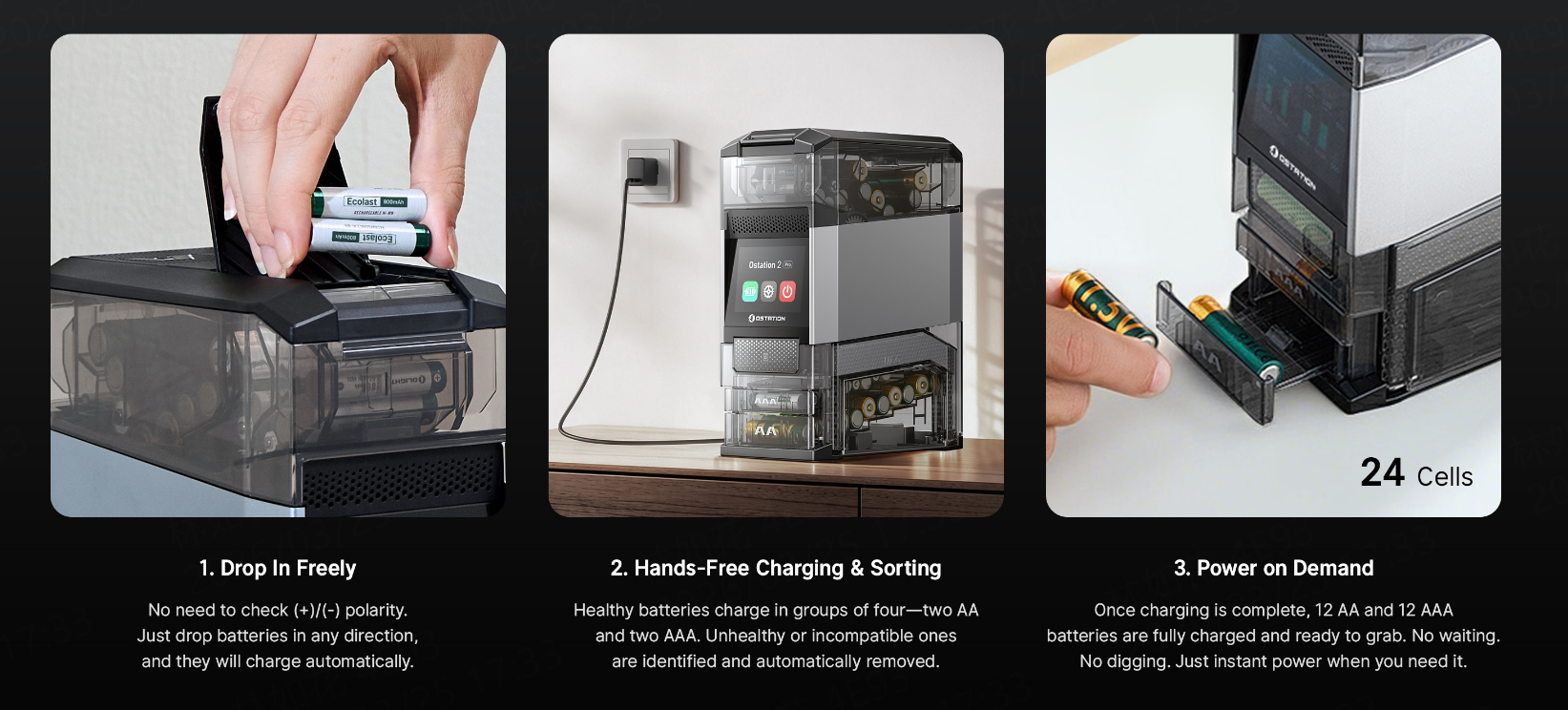
The Ostation 2 series functions as an intelligent vertical silo. You simply drop batteries into the top, and the internal circuitry handles the rest. It automatically recognizes the battery type, applies the optimal charging profile, and moves them into a "ready" state. This automated workflow ensures you always have a fresh set of batteries waiting at the base of the unit.
The 3-in-1 Advantage of the Ostation 2 Series
The "3-in-1" designation highlights the unit's versatility as a storage container, a multi-channel charger, and an organized dispenser:
- Centralized Storage: Eliminates the "junk drawer" problem by providing dedicated internal silos for 12 AA and 12 AAA batteries in a compact, vertical footprint.
- Automated Charging: The device automatically identifies battery chemistry and size, supporting Ni-MH (Nickel-Metal Hydride) and specialized Li-ion (Lithium-ion) 1.5V rechargeable cells.
- Easy Access: Once charged, batteries are dispensed at the base. Pull a battery from the bottom tray, and the next one in line takes its place instantly.
Technical Specifications and Performance
The Ostation 2 and Ostation 2 Pro are engineered for high-efficiency power delivery using modern USB-C PD (Power Delivery) standards. Compare the specific technical parameters below:
Storage Capacity and Organization
For any outdoor enthusiast or professional, organization is a prerequisite for safety. The Smart Battery Hub provides a robust total capacity of 24 batteries. Housing 12 AA and 12 AAA batteries in one reliable location is sufficient to power an entire kit of gear, including headlamps, handheld radios, and trail cameras.
The vertical design utilizes gravity effectively. Users insert depleted batteries through the top lid. This "First-In, First-Out" (FIFO) logic is ideal for maintaining the health of your battery fleet, ensuring you aren't constantly cycling the same two batteries while others sit idle and lose charge over time.
Intelligent Charging and Safety Features
Charging multiple batteries simultaneously requires sophisticated thermal management and circuit protection. The Ostation 2 series includes several layers of safety engineering:
- Automatic Recognition: The hub detects if a battery is Ni-MH or a 1.5V Li-ion cell and adjusts the charging voltage accordingly.
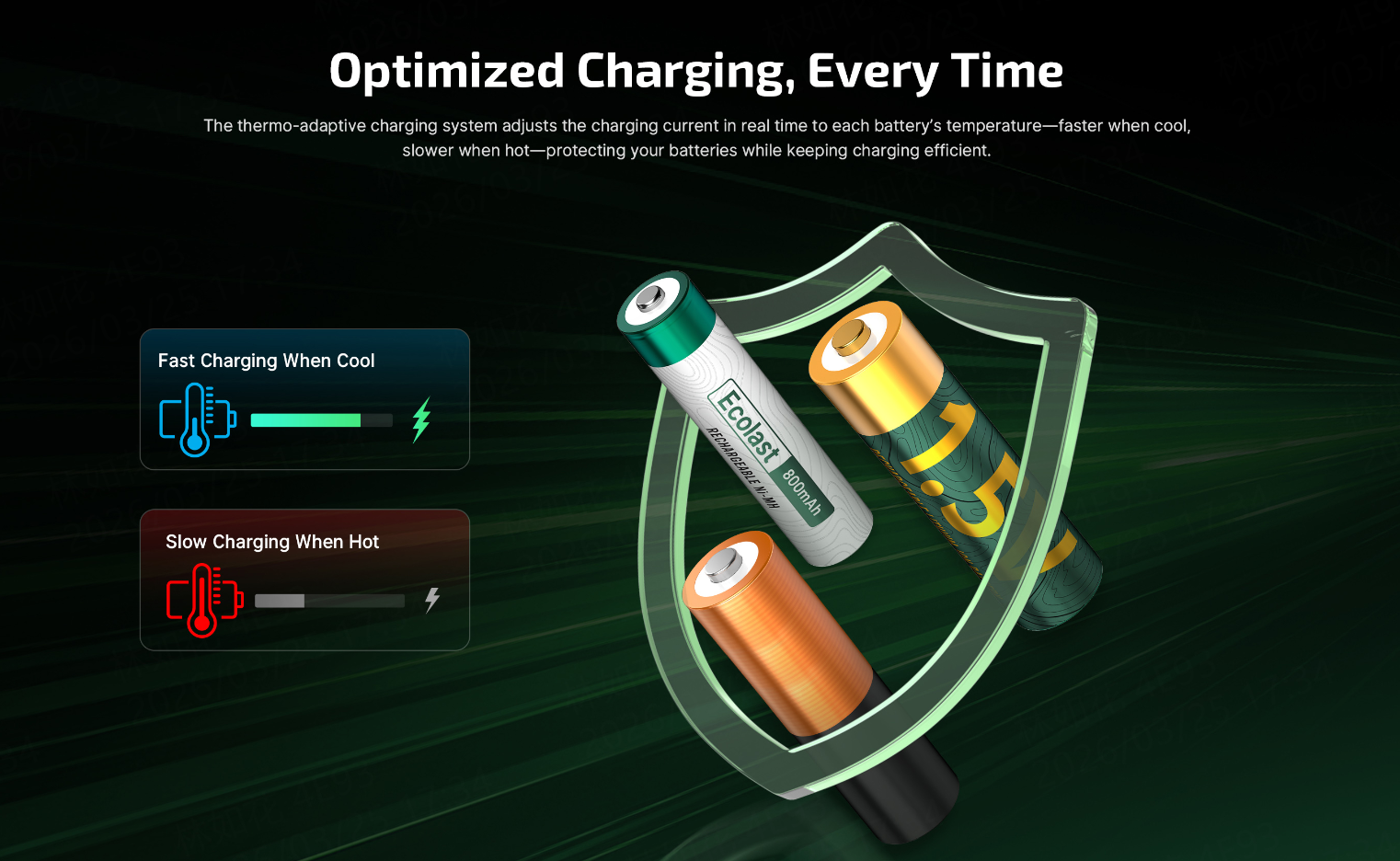
- Thermal Sensors: The unit operates safely between 0-45°C. If internal temperatures exceed safety limits during high-current charging, the system throttles input to protect cell chemistry.
- Advanced Circuit Protection: Built-in safeguards prevent overcharging, short-circuiting, and reverse polarity.
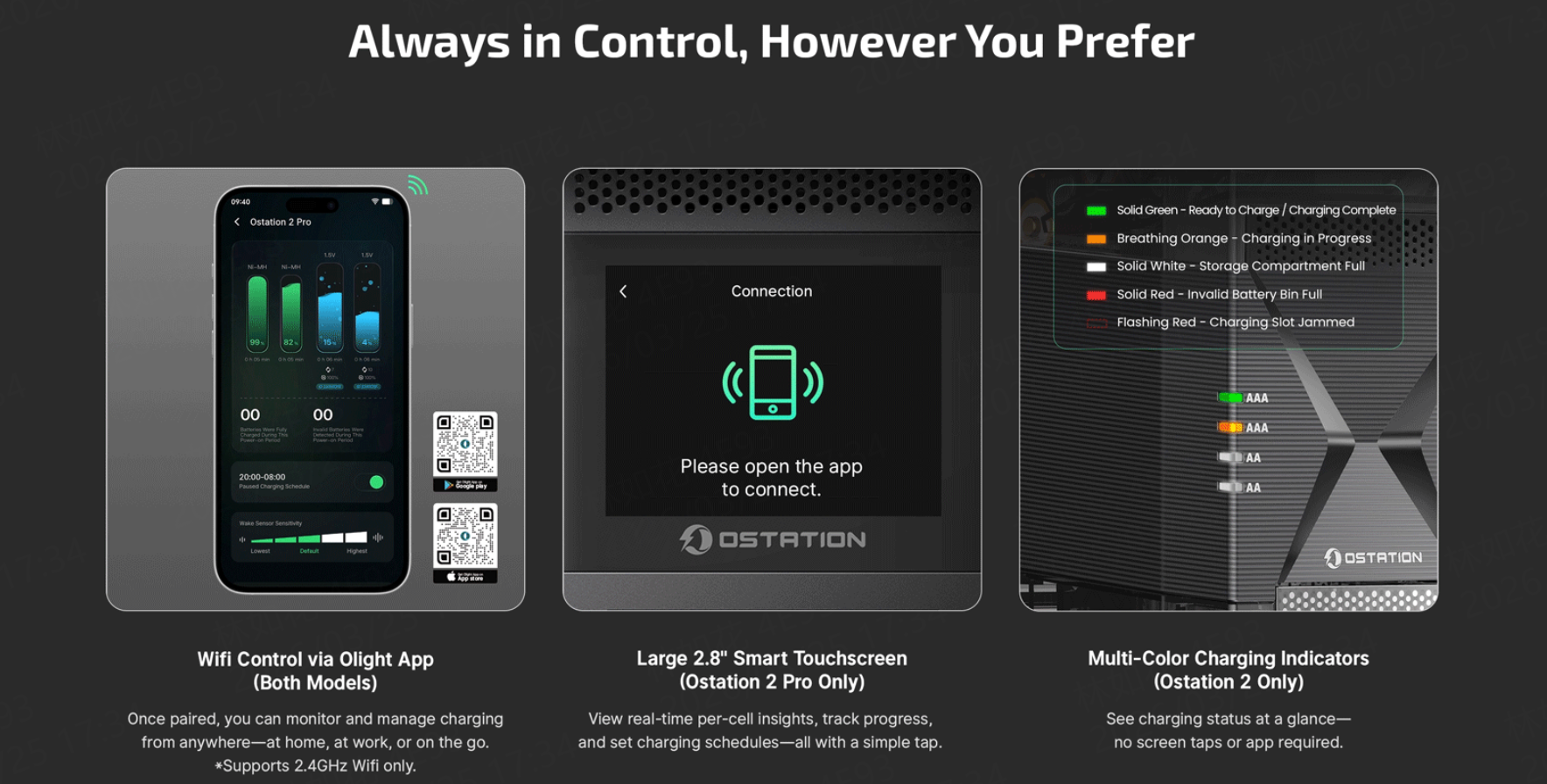
- Status Indicators: Clear visual cues allow users to monitor charging progress at a glance, eliminating the guesswork associated with traditional chargers.
Ostation 2 vs. Ostation 2 Pro: Choosing the Right Model
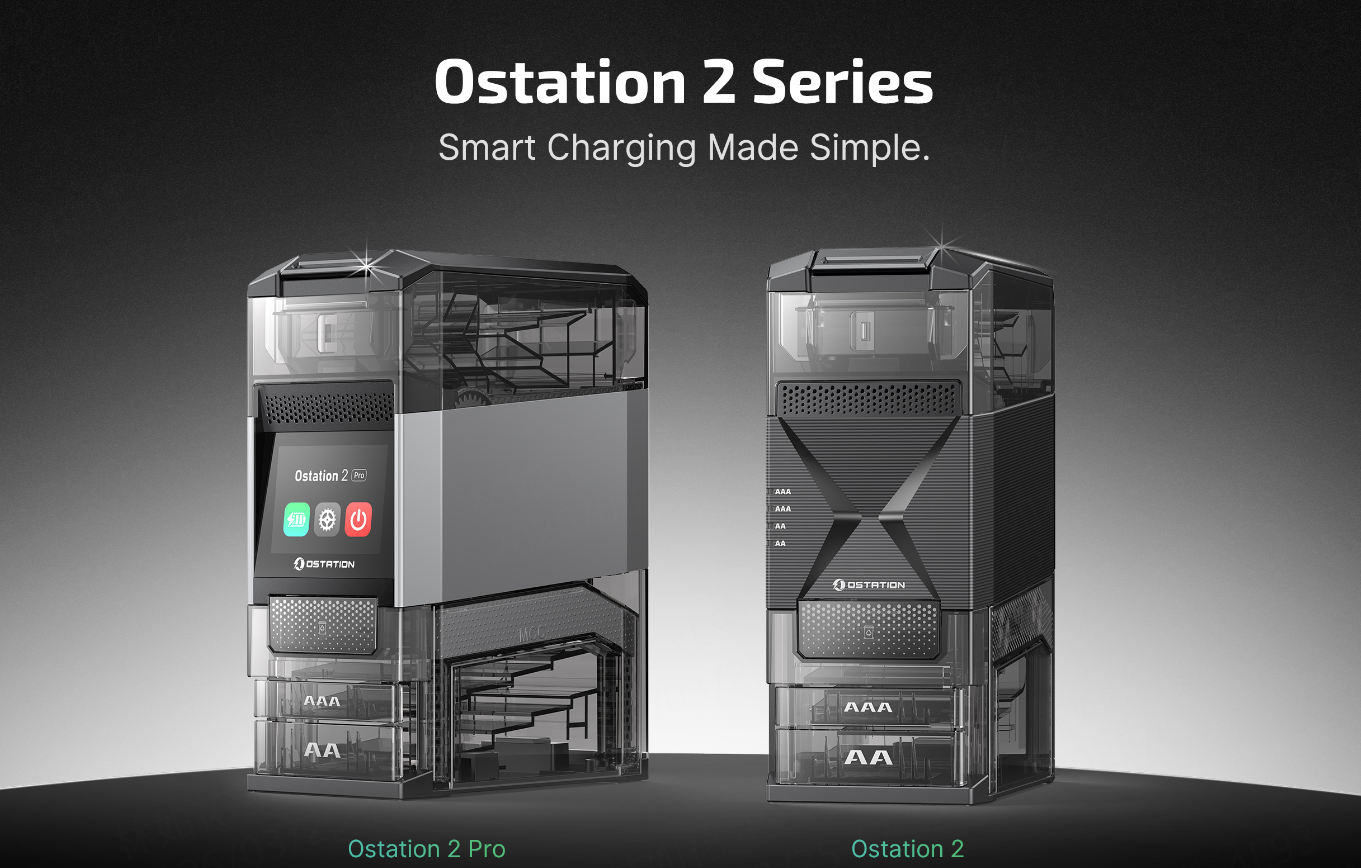
While both models share the same physical dimensions and storage capacity, the distinction lies in power input efficiency and internal overhead.
The Ostation 2 utilizes a 5.0V-2.0A input, making it compatible with standard USB-C wall adapters. It provides a reliable, steady charge that is gentle on battery chemistry, helping to extend the overall cycle life of your Ni-MH cells.
The Ostation 2 Pro steps up to a 12.0V-1.5A PD 3.0 input. This higher voltage allows the internal power management system to operate with greater efficiency when all four charging channels are under full load. The Pro model also features a slightly heavier build, providing extra stability on a busy workbench or in high-traffic environments.
Practical Applications for Canadian Outdoor Enthusiasts
In Canada, environmental conditions demand reliable gear. Whether preparing for a trek in the Rockies or managing a remote cabin, battery reliability is non-negotiable.
- Winter Readiness: Alkaline batteries perform poorly in sub-zero temperatures. This hub makes it easy to maintain a rotating stock of cold-weather-ready Ni-MH or 1.5V Li-ion rechargeables.
- Emergency Preparedness: During power outages or storm seasons, having a central station with 24 charged batteries provides an immediate power reserve for emergency lighting and weather radios.
- Expedition Staging: The hub acts as a professional staging area, ensuring every battery you pack into your gear bag is verified as fully charged before you head out.
Sustainability and Long-Term Cost-Savings
The environmental impact of single-use alkaline batteries is significant. By switching to a Smart Battery Hub and rechargeable cells, a single household can prevent hundreds of batteries from entering landfills over several years.
From a financial perspective, high-quality rechargeable batteries can be cycled up to 500-1,000 times. Even with the initial investment, the cost-per-use drops drastically compared to buying bulk packs of disposables. The Ostation 2 ensures you maximize this ROI by charging batteries correctly and preventing premature capacity loss.
Conclusion: Upgrading Your Energy Infrastructure
The Ostation 2 Series 3-in-1 Smart Battery Hub is a practical solution for the modern, energy-conscious home. It moves beyond the limitations of traditional charging by combining organization, intelligence, and high-capacity storage into a single, elegant device.
For those who prioritize efficiency and readiness, this hub is a necessary upgrade. It simplifies a tedious task, protects your investment in rechargeable technology, and ensures you are never left in the dark. Whether you choose the standard Ostation 2 or the Pro version, you are implementing a professional-grade energy management system built for the demands of the future.