TL;DR
Whether searching for a handheld torch vs flashlight, regional language nuances shape how outdoor enthusiasts buy gear. In British and Commonwealth English, "torch" refers to a battery-powered light, whereas North Americans reserve the word for open flames or blowtorches and use "flashlight" instead. Understanding this linguistic evolution helps cross-border shoppers select high-performance EDC gear, like low-glare, high-lumen LED lights built for camping, emergency preparedness, and everyday carry.
Linguistic differences often spark friendly debates among outdoor enthusiasts around the world. One of the most common debates centers on a simple question: Is it a torch or a flashlight? Depending on where you live or travel, the answer changes entirely. While a hiker in Canada asks for a flashlight, a camper in the United Kingdom searches for their torch.
Understanding the history behind these terms does more than settle a linguistic debate. It helps you navigate the global gear market, read product specifications accurately, and select the best portable illumination for your adventures. This comprehensive guide explores the evolution of the portable light source, details how terminology differs by region, and introduces the modern lighting tools available today.
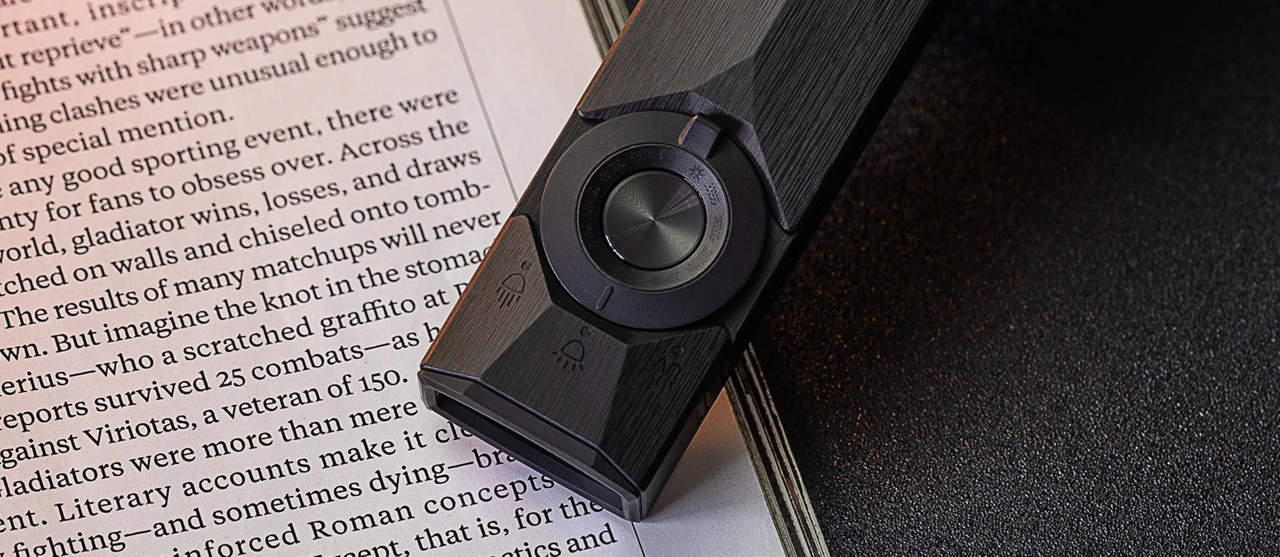
Table of Contents
The Meaning of "Torch": From Ancient Fire to Modern LED
Torch in British vs. North American English
Different Types of "Torches" You'll Encounter
A Brief History of the Portable Light Source
How Olight Bridges Global Terminology
FAQ
Conclusion: One Word, Many Lights
The Meaning of "Torch": From Ancient Fire to Modern LED
The Origin of the Word "Torch"
To understand the modern torch meaning, we must look back to its Latin roots. The word originates from the Late Latin term torca, which translates to a "twisted bundle of tow." Tow refers to coarse flax or hemp fibers. Historically, people made a torch by twisting these fibers together, wrapping them around a wooden stick, and soaking them in flammable substances like pitch, tallow, resin, or animal fat. Once ignited, this simple contraption served as the primary mobile light source for ancient civilizations.
How Meaning Evolved Across Cultures
Over the centuries, the term transitioned from describing literal burning sticks to representing any self-contained, portable light source. In many European and Commonwealth countries, when battery-powered lights emerged, people naturally kept the familiar word "torch" to describe them. It represented safety, mobility, and the ability to carry light into dark, unknown environments. Today, the word spans from open flame symbols of hope to high-tech light-emitting diode (LED) pocket lights. According to linguistic documentation in the Oxford English Dictionary (OED) Etymology Guide, the semantic shift from burning resinous sticks to portable electric appliances occurred rapidly in late 19th-century British English following early battery lighting patents.( Source: Oxford English Dictionary (OED) Etymology Guide)
Torch in British vs. North American English
Why Canadians Sometimes Say Both
For outdoor enthusiasts in Canada, language is unique. Due to Canada's deep historical ties with the British Commonwealth combined with its close geographic and cultural proximity to the United States, Canadians often use British and American terms interchangeably. While "flashlight" remains the dominant term in retail stores and daily life, "torch" is widely understood and frequently used by hiking groups, military personnel, and global travelers. Whether shopping locally or cross-border online, Canadian consumers frequently navigate both terms to find precision lighting gear.
Torch = Flashlight in UK/AU; Torch = Fire/Blowtorch in US/CA
The regional torch vs flashlight difference boils down to geography:
- United Kingdom, Australia, New Zealand, South Africa: A "torch" is an ordinary battery-powered, handheld electric light.
- United States and Canada: A "torch" refers to an open flame, a ceremonial fire stick, or a high-heat gas tool used for welding and cooking (such as a blow torch). North Americans exclusively use "flashlight" for battery-powered lighting tools.
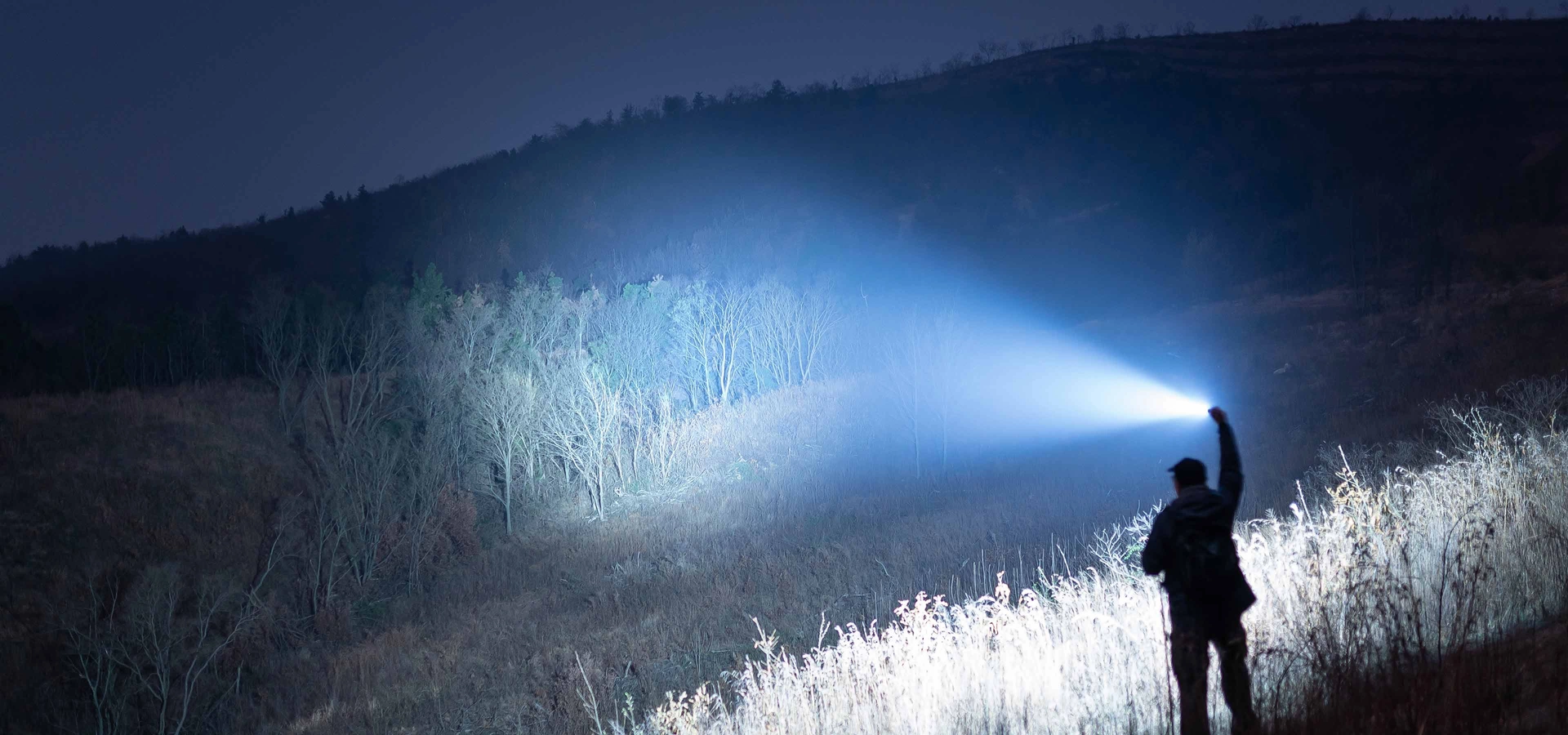
Different Types of "Torches" You'll Encounter
The English language uses the word "torch" in several distinct contexts. Here are the primary types of modern flashlights and high-heat tools you will encounter:
Handheld LED Flashlights (Modern "Torches")
These are highly efficient electric lights used for everyday carry (EDC), search and rescue, camping, and tactical situations. They rely on rechargeable lithium-ion batteries and advanced optical lenses. Engineered for modern outdoor demands, high-efficiency LED flashlights combine extreme impact resistance, waterproof housings, and multi-stage beam diffusers to protect night vision during night navigation.
Blow Torches & Propane Torches
A blow torch is a fuel-burning tool that produces an extremely hot, concentrated flame. Plumbers, chefs, and metalworkers use them to solder pipes, caramelize sugar, or melt ice. As safety documentation by the U.S. Consumer Product Safety Commission (CPSC) Gas Torch Safety Guide notes, fuel-based gas torches require pressurized canisters and localized heat shielding, making them strictly functional industrial tools rather than illumination devices ( Source: U.S. Consumer Product Safety Commission (CPSC) Gas Torch Safety Guide).
Ceremonial & Olympic Torches
These iconic wooden or metallic structures carry an open flame. The most famous example is the Olympic Torch, which symbolizes peace and unity as it travels across the globe.
Tiki & Garden Torches
These popular outdoor decorations consist of bamboo or metal poles filled with oil or wax. They burn a soft flame to illuminate backyards and keep insects away.
A Brief History of the Portable Light Source
From Oil Lanterns to Incandescent Bulbs
The handheld light source history is a story of human ingenuity. Before electricity, humans relied on burning wood, oil lanterns, and candles to navigate the dark. This changed in 1899 when British inventor David Misell obtained a patent for the first electric flashlight.
Early models used primitive dry cell batteries and fragile carbon filament bulbs. According to historical records compiled by History of Lighting, early dry cell batteries lacked sufficient energy for continuous lighting; as a result, users had to press the contact switch briefly to emit short flashes of light, which led to the device being named the "flashlight" in the United States.( Source: History of Lighting)
The LED Revolution & Modern EDC Culture
The introduction of Light Emitting Diodes (LEDs) in the late 20th century revolutionized portable lighting. LEDs consume a fraction of the energy of incandescent bulbs while delivering ten times the brightness. Combined with modern rechargeable batteries, this innovation birthed the "Everyday Carry" (EDC) culture, where enthusiasts carry ultra-compact, high-lumen, multi-functional tools in their pockets daily.
How Olight Bridges Global Terminology
Whether you call it a torch or a flashlight, Olight designs world-class, dependable gear for global users. Here are three popular options designed to meet your illumination needs:
1. Olight Warrior 3S High Beam Tactical Flashlight
Built for extreme reliability, the Warrior 3S is a premium tactical lighting tool suited for law enforcement, search missions, and outdoor defense.
Key Specifications
- Max Performance: 2,300 lumens
- Beam Distance: 300 meters
- Max Light Intensity: 23,000 candela
- Waterproof Level: IPX8
- Length: 5.47 in / 139 mm
- Body Diameter: 1.16 in / 29.5 mm
- Weight: 176 g / 6.21 oz (Including Battery)
- Compatible Batteries: Customized 3.6V 5000mAh 21700 Lithium-ion Battery
- Charging Type: MCC3 USB magnetic charging
You can purchase yours here:
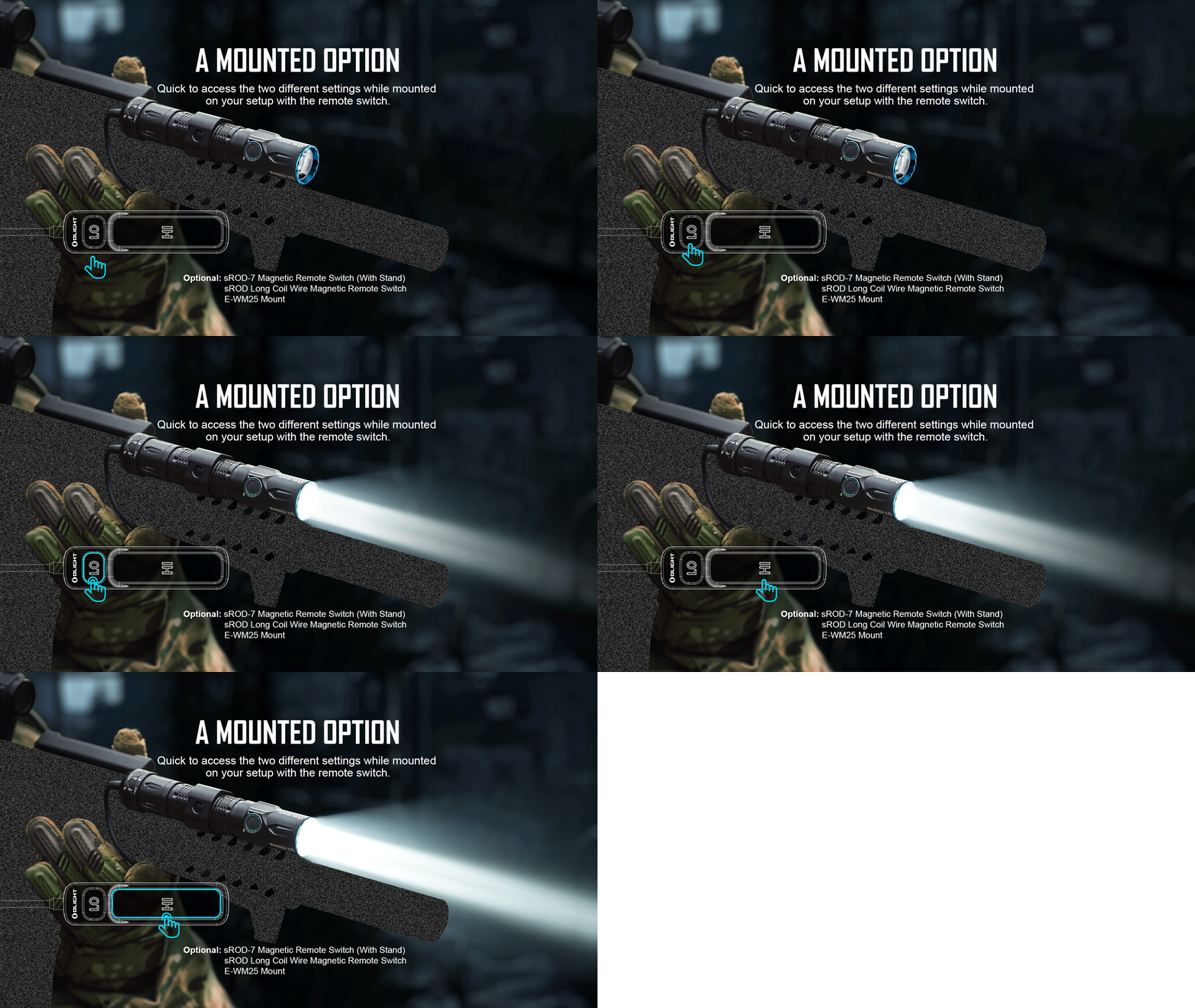
Olight Warrior 3S
High-performance dual-switch tactical flashlight featuring a 2,300-lumen max output, proximity sensor protection, and tactical tail cap.
Shop Warrior 3S →2. Olight Baton 4 Powerful EDC Flashlight 1300 Lumens
The Baton 4 is the ultimate compact companion, easily fitting into coin pockets or attaching to hat brims.
Key Specifications
- Max Performance: 1,300 lumens
- Beam Distance: 557 ft / 170 m
- Max Light Intensity: 7,225 candela
- Waterproof Level: IPX8
- Dimension: 2.48 x 0.83 x 0.83 in / 63 x 21 x 21 mm
- Weight: 1.85 oz / 52.5 g (Standard, Battery Included)
- Compatible Batteries: Customized 650mAh 3.6V IMR 16340 Rechargeable Battery
- Charging Type: MCC 1A Magnetic Charging Cable (Flashlight)
You can purchase yours here:
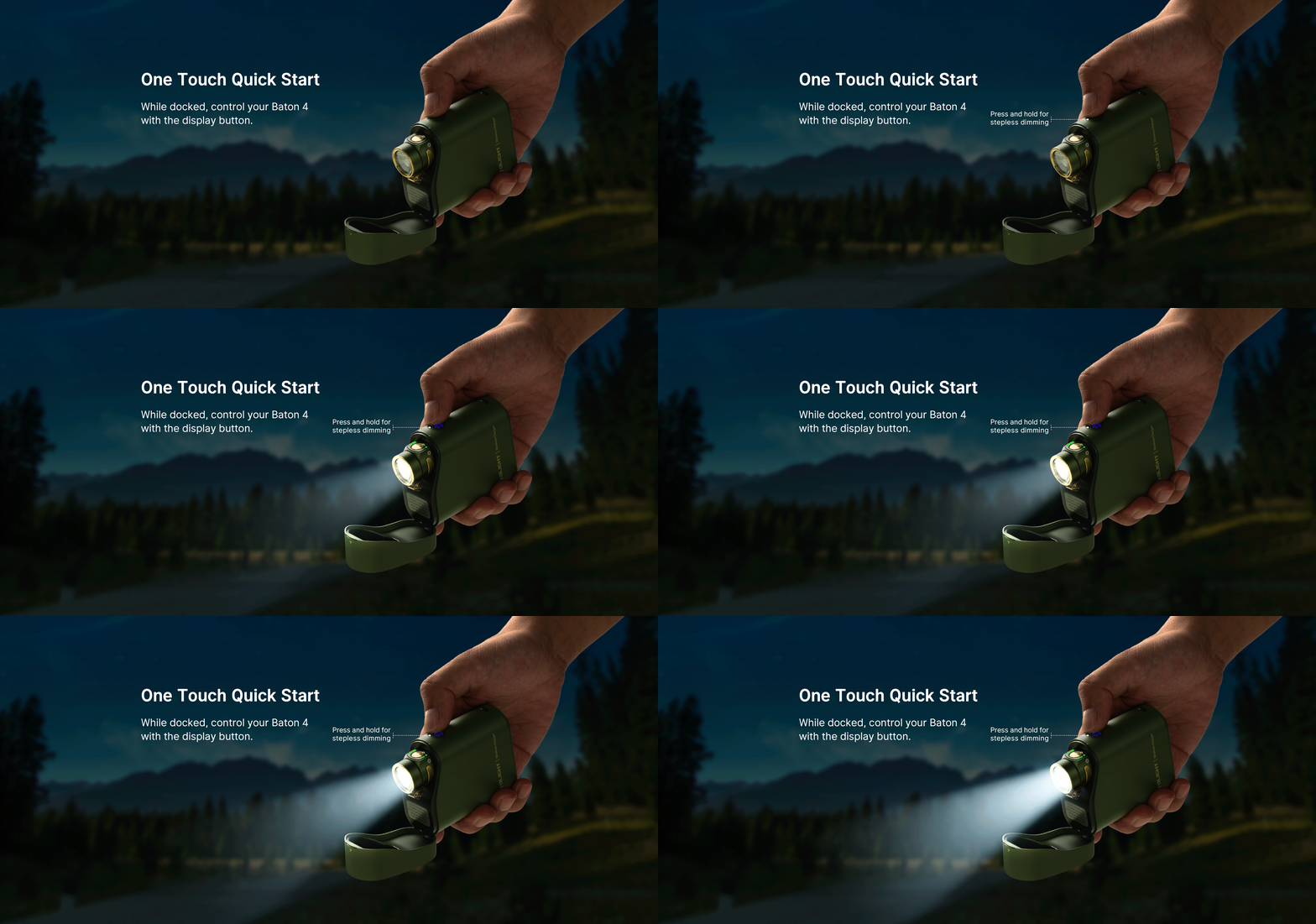
Olight Baton 4
Delivers a maximum output of 1,300 lumens with an upgraded beam distance, micro-sized body, and intuitive power indicators.
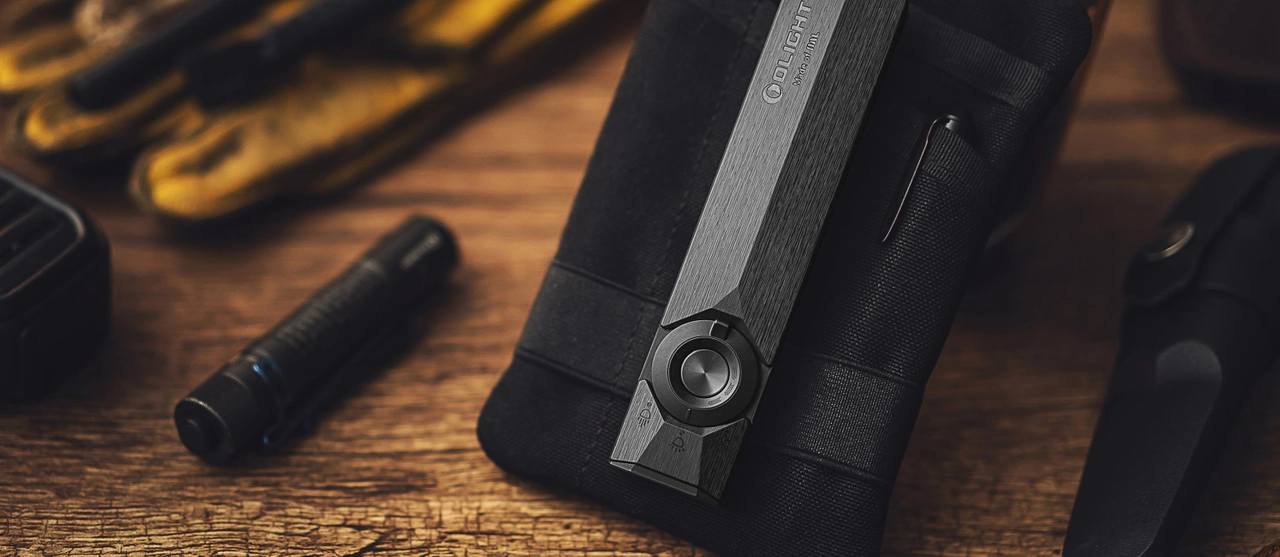
Shop Baton 4 →3. Olight ArkPro Ultra Flat Unibody EDC Flashlight
For those seeking versatility, the ArkPro Ultra offers a unique flat design packed with four separate light sources.
Key Specifications
- Max Performance: 1,500 lumens
- Beam Distance: 672 ft / 205 m
- Max Light Intensity: 10,640 candela
- Waterproof Level: IPX7
- Wavelength: UV: 365 nm; Green Laser: 510~530 nm
- Dimensions: 4.88 x 1.06 x 0.63 in / 124 x 27 x 16 mm
- Weight: 4.05 oz / 115 g (Including Battery)
- Battery Capacity: 2,000 mAh
- Charging Type: USB-C and MCC Magnetic Charging
You can purchase yours here:
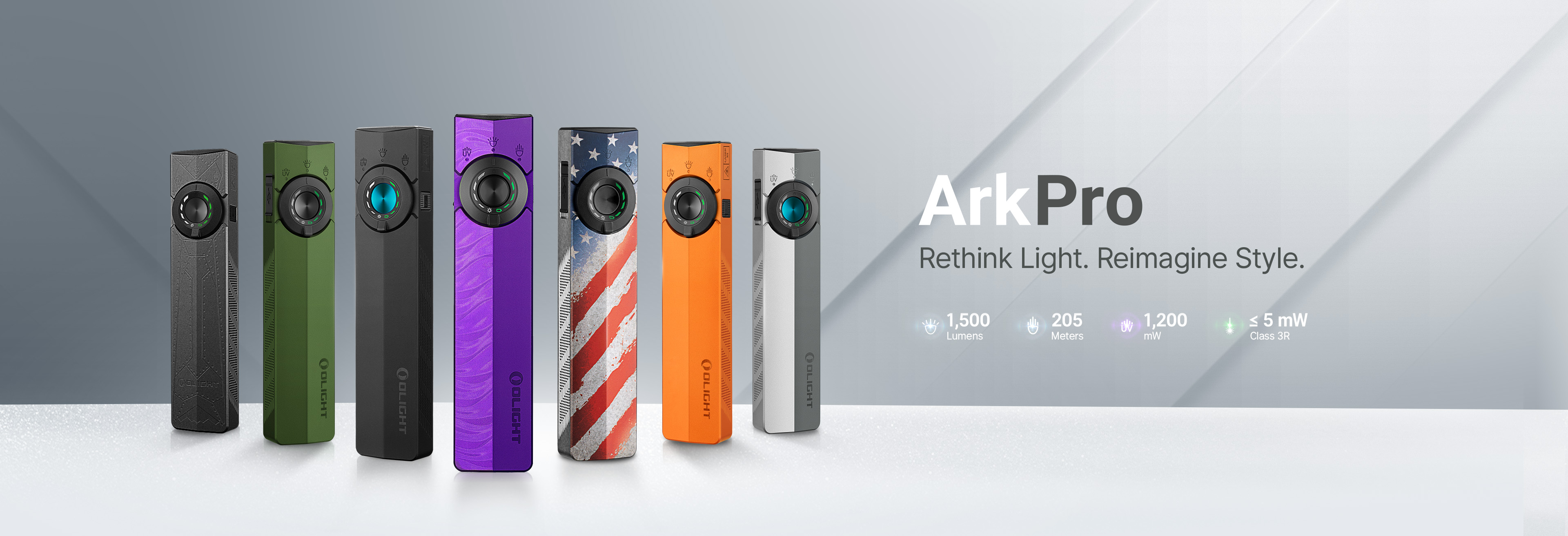
Olight ArkPro Series
Ultra-thin flat EDC flashlight series designed for comfortable pocket carry, high-efficiency illumination, and sleek modern aesthetics.
Shop ArkPro Series →FAQ
Q1: How do I choose between a traditional round EDC flashlight and a modern ultra-flat model?
A: Traditional cylindrical flashlights excel in throw distance, localized heating dissipation, and modular battery replacements, making them ideal for heavy-duty outdoor and tactical use. Ultra-flat flashlights, on the other hand, are engineered specifically for deep-pocket comfort, active daily carry (EDC), and multi-functionality—often incorporating auxiliary UV lights or laser modules into a slim footprint. Choose based on whether your priority is long-range beam intensity or seamless pocket mobility.
Q2: What key technical specs should I compare when reading an LED lighting specification table?
A: Focus on three critical metrics: Lumens (total light output volume), Candela / Beam Distance (how concentrated and far the light travels), and Battery Capacity / Runtime (how long it sustains specific brightness modes). Additionally, inspect the IPX Waterproof Rating (IPX8 is required for submersion) and Impact Resistance ratings to ensure the build quality matches your intended operating environment.
Q3: Can I carry a tactical flashlight on a plane in Canada?
Conclusion: One Word, Many Lights
From ancient bundles of burning fibers to advanced LED flat lights, portable illumination has come a long way. Whether you call it a torch or a flashlight, having a dependable handheld light source is a fundamental safety practice for any adventure. By choosing quality gear and understanding the tools at your disposal, you can boldly navigate any dark environment.