At a glance
Keep a charged rechargeable flashlight as your main light and a hand crank flashlight or a light with fresh spare batteries as your backup. A rechargeable beam is ready for repeated trips down the stairs when an ice storm knocks out the power. A wind-up flashlight can give you short bursts of light after your stored charge runs out, as long as you can operate the crank. If you can buy only one light and have no dependable way to recharge it, prioritize a wind-up model you can comfortably crank or a battery-powered model with spare cells.
The Government of Canada recommends keeping enough supplies for at least 72 hours, whether you stay home or need to evacuate. Its checklist includes a wind-up or battery-powered flashlight, extra batteries or battery packs, and a phone charger and power bank. Estimate how many hours you’ll use each light during those three days and plan for longer if local conditions warrant it. Government of Canada emergency kit checklist
| What matters | Hand crank flashlight | Rechargeable flashlight |
|---|---|---|
| Power after the outage starts | A built-in generator turns hand cranking into electrical energy. | A charged battery is ready to use. Recharging takes a compatible cable, case or dock and a power source. |
| Practical runtime | Look for usable minutes after a stated period of cranking. | Compare hours at the brightness you’ll use, with any step-downs included. |
| Best role | Short jobs when outlets and battery packs are unavailable. | Repeated chores, walking indoors or lighting a wider area when the conditions are safe. |
| What can let you down | A damaged crank, an ageing internal battery on models that use one, or a handle that’s hard to grip. | A flat battery, a misplaced charging accessory, or a power bank already drained by other devices. |
| What to include in the cost | The light itself and any batteries required for its other power modes. | The light, the required accessories and enough reserve power for the outage. |
How much light can you get from a wind-up flashlight?
A wind-up flashlight uses a small generator to turn motion into power. On models with an internal battery, the crank replenishes that battery. Runtime depends on the model, the cranking speed and the beam setting. For example, Energizer’s WRRADCK datasheet rates the flashlight for about ten minutes of light after one minute of winding. Use that as an example of how a manufacturer reports performance. Check your own model’s directions and see whether a minute of cranking gives you enough usable light to find the emergency kit or read its contents. Ideally, everyone who may need the light can deploy and turn the handle, including with gloves if they’ll use it in the cold. Energizer crank flashlight datasheet
If a wind-up light also has a USB output, check its manual and try it with your phone before counting on it. Plan separate phone power if you’ll use your phone for outage updates. Government of Canada emergency communications guidance
Three rechargeable flashlights for different jobs
Baton 4 Premium Edition for compact lighting with a reserve
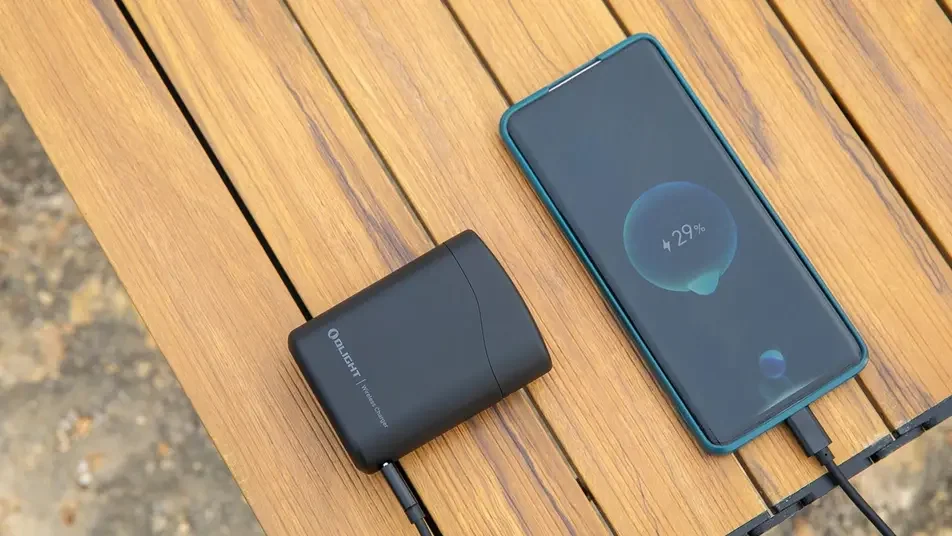
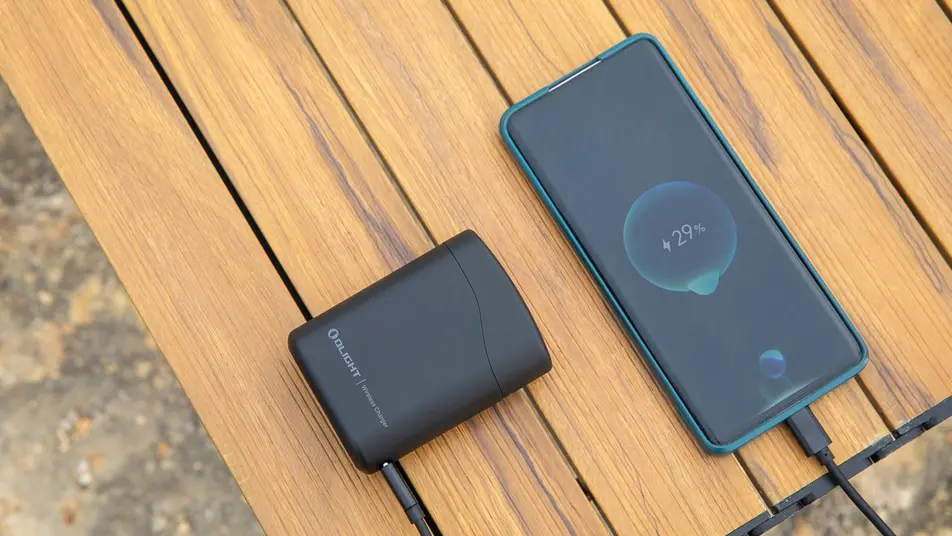
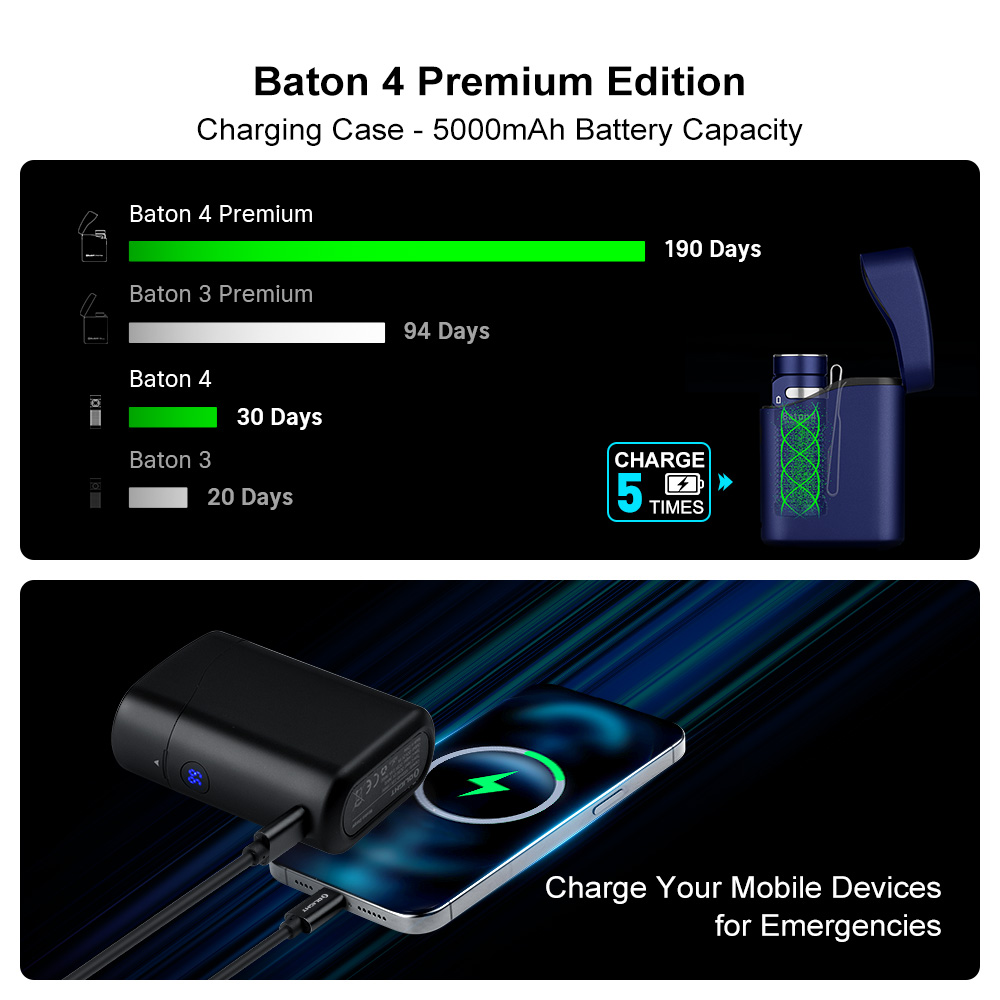
Keep the Baton 4 Premium Edition near the emergency kit if you want a compact lamp and a charging reserve in one place. The standard cool-white Baton 4 in the kit peaks at 1,300 lumens. Olight rates one charge for 8 hours at 60 lumens or 35 hours at 12 lumens. Check 12 lumens in a familiar room, then use a brighter mode when the task needs it. The Premium Edition includes a 5,000 mAh case that can recharge the lamp away from an outlet while the case has energy left. Its USB-C output can also top up a compatible phone. Both jobs share the same reserve, so decide in advance how much you’re willing to use for the phone. Olight Baton 4 Premium Edition manual
Seeker 4 Pro for wider coverage and longer low-mode use
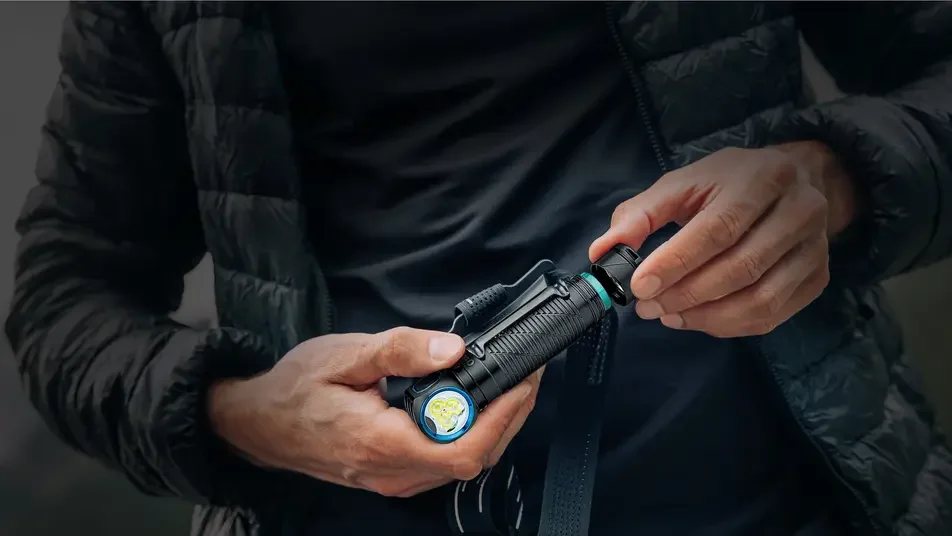
The Seeker 4 Pro fits a larger house, a rural property or an RV kit where you want a broader beam. Olight rates it for 60 hours at 50 lumens or 11 hours at 300 lumens. Turbo starts at 4,600 lumens and steps down after about 2.5 minutes in the manufacturer’s test. Its USB-C port is on the charging holster. Pack the holster and cable together, or use the compatible Olight magnetic charging cable, sold separately in the standard package. Keep a separate power bank if you need to charge your phone. Olight Seeker 4 Pro manual
imini 2 for a light you can find on your keys
The imini 2 turns on when you pull it off its magnetic cap. It suits quick jobs such as finding a door lock or locating the main light. Olight lists a single 50-lumen setting and a rated runtime of 60 minutes. To recharge it, plug the built-in USB-A connector into a compatible power source. If your power bank only has USB-C, check your charging setup ahead of time. Keep a longer-running light in the kit for repeated tasks. Olight imini 2 specifications · Olight imini 2 manual
Plan your lighting for a 72-hour outage
- Plan for the hours you’ll use it. If one household light runs for two hours each evening and one hour each morning, budget nine hours over three days. A Baton 4 rated for eight hours at 60 lumens then needs a top-up or a second light. Choose the setting you can use safely for the task and leave margin for extra trips and other household members.
- Give the backup a separate power source. A crank light or a flashlight with spare cells stays usable when the main power bank is flat. For room lighting or chores that need both hands, consider a lantern or headlamp as part of the setup. Olight Canada’s headlamp guide
- Test the whole setup before the storm. Put the main light where you can reach it in the dark. Charge it and its reserve, check that the intended cable works, then try the backup where you’ll use it. Olight lists a 0–40 °C operating range for the standard Baton 4 and Seeker 4 Pro. If the light will live in an unheated vehicle or be used outside in freezing weather, pick a model rated for those temperatures and follow its storage and charging instructions. Olight Baton 4 Premium Edition manual · Olight Seeker 4 Pro manual
- Keep lighting and communications ready. Use your local hydro utility’s outage updates or a battery-powered or wind-up radio if you lose internet access. Maintain a separate phone-charging reserve and review its charge when you check the rest of your kit. Government of Canada power outage guidance
Common questions about emergency flashlights
Is a hand crank flashlight worth it for an ice storm?
Yes, if your household can operate it and gets enough light from a short crank for a close-range task. It’s especially useful if you have no way to recharge the main flashlight. Test it with gloves before planning to use it outdoors. If cranking is uncomfortable or impractical for anyone who may need the light, give them a battery-powered backup with spare cells and controls they can use easily.
Does a 72-hour kit need a flashlight that lasts 72 hours straight?
The 72 hours apply to the household’s supply plan. Add up the time the beam will actually be on and check the runtime at a setting bright enough for your task. A low-output moonlight mode may work for finding something on a bedside table. Test it before relying on it for stairs or a larger room.
Can a rechargeable flashlight work when the power is out?
Yes, from its own charged battery. To top it up, connect a precharged power bank to the specified cable, case or holster. Test the exact combination while you have power, and keep the charging parts with the light.