Choose the Olight Oclip Pro S if you want a rechargeable UV flashlight you can clip to a work apron for close checks. Choose the ArkPro Ultra if you also need a wide white beam and a separate spotlight in one pocket light. For a hotel bed bug check, start with the white beam on either model. A UV glow alone can’t identify an insect or tell you whether a room is clean.
These five Olight picks are grouped by the job they suit. The specifications are manufacturer ratings; the recommendations weigh beam options, mounting, charging and water resistance for each use.
| Model | Best fit | White light maximum | UV wavelength | Charging |
|---|---|---|---|---|
| ArkPro Ultra | One light for inspections and general lighting | 1,700 lm flood; 800 lm spot | 365 nm | USB-C or Olight magnetic cable |
| Arkfeld Ultra | Flat everyday carry with white, UV and a green pointer | 1,400 lm | 365 nm | Olight magnetic cable |
| Oclip Pro S | Hands-free checks with a white beam and coloured light options | 600 lm | Nominal 365 nm | USB-C |
| Arkfeld UV | Slim pocket option with two clearly distinct light sources | 1,000 lm | 365 nm typical | Olight magnetic cable |
| Oclip Ultra | Small clip light with separate white flood and spot beams | 530 lm flood; 450 lm spot | Nominal 365 nm | USB-C |
How to choose a UV flashlight: 365 nm or 395 nm?
Both wavelengths are UV-A. A 365 nm flashlight generally produces less visible violet spill than a 395 nm flashlight, all else being equal. That can make faint fluorescence easier to see against a dark background. A 395 nm light can still suit a fluorescent marker that responds well to it. If you’re checking a particular material, compare an untreated area with a known fluorescent sample before drawing a conclusion. See Olight Canada’s guide to 365 nm UV for more on how fluorescence works.
Look at the UV wavelength and the beam itself, not the lumens printed on the box. Lumens describe visible light. UV output, when specified, is often given in milliwatts. A high UV output figure alone can’t tell you how easy a mark will be to see: beam spread, distance, the material and room light all matter. For a windowless utility room, control over glare and a useful white low setting may count for more than a high peak rating.
Check runtime for the mode you’ll actually use. White moonlight runtime tells you little about a UV inspection. Also check charging: USB-C is convenient if you already carry a cable; a magnetic-only model means packing its matching lead. For outdoor work, a splash or water-jet rating and an immersion rating describe different tests. Follow the model’s manual and keep open charging ports dry.
Five rechargeable UV flashlights compared
Peak white outputs apply to the listed beams, not the UV channel or continuous running brightness.
1. Olight ArkPro Ultra: Best all-round inspection light
The ArkPro Ultra makes sense if you regularly alternate between lighting a room, looking into a recess and checking a fluorescent mark at close range. It offers separate white flood and spot emitters, UV and a green pointer. The user manual lists two UV levels, an IPX7 rating and two ways to charge. Use the lower UV setting for short checks when it gives you enough contrast. Keep the UV beam away from reflective surfaces, and follow the laser precautions in the manual for your specific version. If you only need white and UV, the Arkfeld UV gives you a simpler set of controls and fewer features to pay for if the local price is lower.
2. Olight Arkfeld Ultra: Best flat light for everyday carry
The Arkfeld Ultra pairs a single white beam with UV and a green pointer. Its flat shape fits easily alongside other pocket items, and the selector lets you choose the light source. Olight lists a 1,400 lm peak white output and 365 nm UV in its Arkfeld comparison and Arkfeld Ultra manual. Pick this model if you prefer one white beam and already use Olight magnetic charging. If you want a separate white spot or direct USB-C charging, choose the ArkPro Ultra instead. Follow the laser precautions in the manual for your specific version.
3. Olight Oclip Pro S: Best for hands-free checks
The Oclip Pro S puts UV, a white light rated up to 600 lm and separate red, green and blue light in a clip-on body. Its spring clip can free both hands when you need to lift a cushion edge or hold a removable panel in place. Try the mounting angle in white mode before switching to UV. If you’re comparing listings, check for the S: the Oclip Pro sold by Olight Canada has white flood, white spot and red, without UV.
4. Olight Arkfeld UV: Best simple pocket light
At 87 g, the Arkfeld UV is the lightest of the three flat models in this guide. It gives you a white beam and a UV beam without a laser. The manual lists a typical UV output of 580 mW, up to four hours in UV mode and IPX7 water resistance. Those are separate specs: the maximum runtime doesn’t mean the light maintains its typical output for four hours. This is the simplest choice for occasional inspection if you’re comfortable carrying a dedicated magnetic charging lead.
5. Olight Oclip Ultra: Best compact clip light with a white spotlight
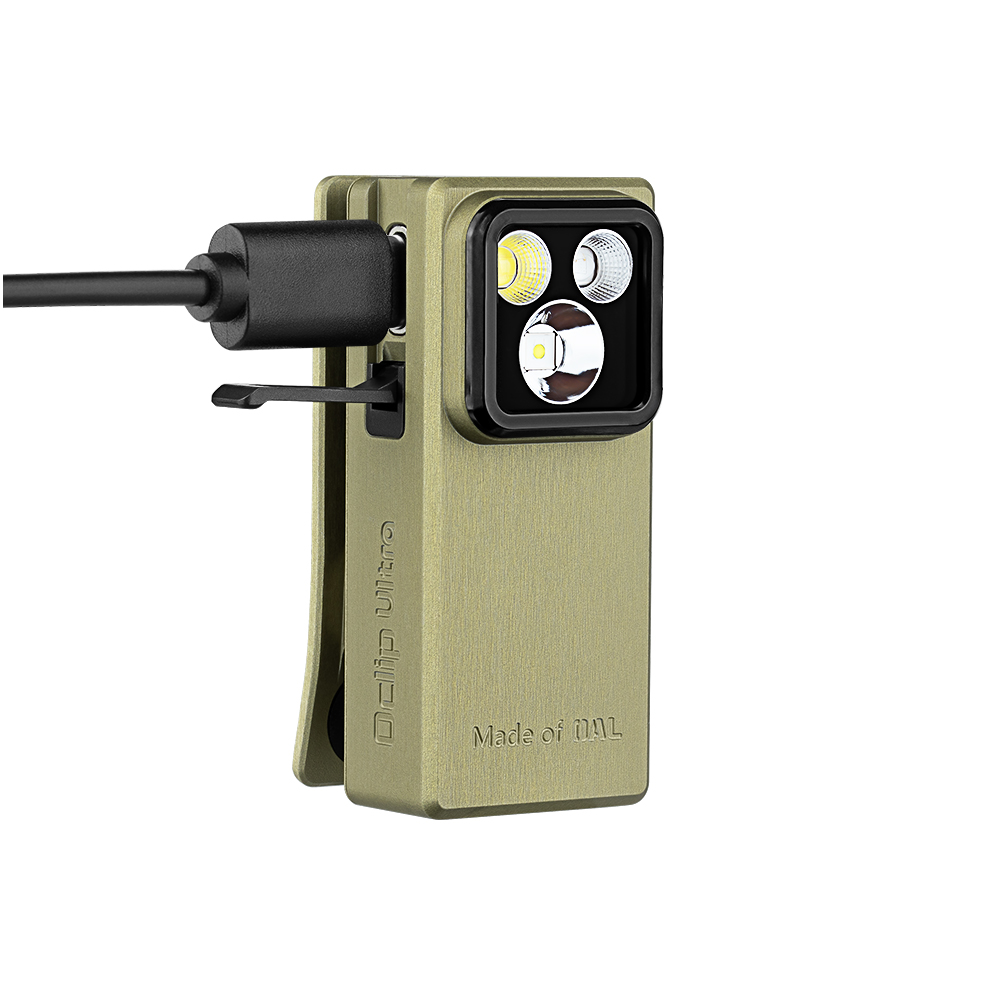
The original Oclip Ultra offers UV plus two white beams. Clip it to an apron for a quick fluorescence check, switch to white flood to see the work surface, or select white spot for a deeper recess. Its manual lists IPX6 and a covered USB-C port. Choose it over the Pro S when distinct white flood and spot modes matter more than coloured visible light. Check the name on the box: the original Oclip Ultra and the Oclip 2 Ultra are different products.
What a UV flashlight can help you inspect
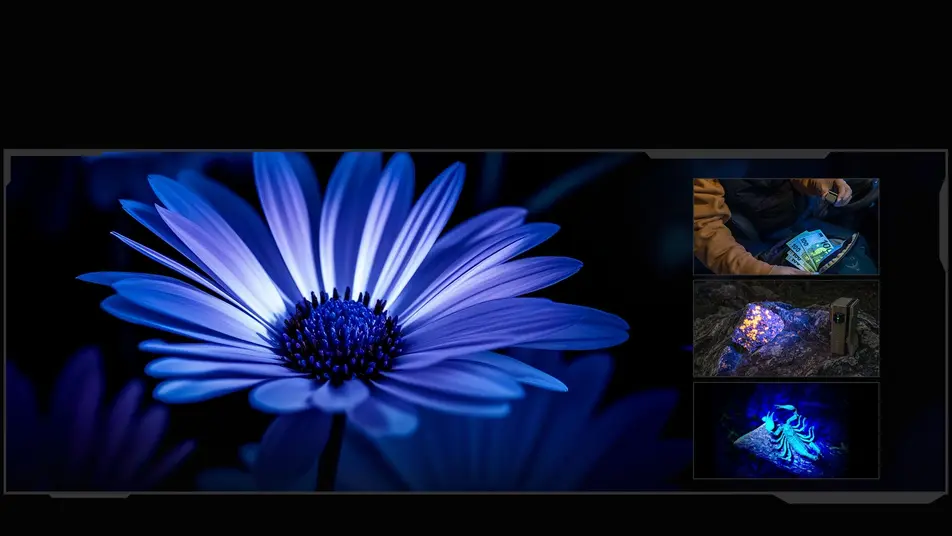
Pet stains and rental walkthroughs. In a dim room, scan a suspected area and compare it with the surrounding surface. Some detergent residues, fibres and other materials can also fluoresce. Treat a glow as a spot to inspect under white light. Neither a bright patch nor the absence of one tells you whether a surface is sanitary.
Checking for bed bugs in a hotel or short-term rental. Use a white flashlight to check mattress piping, seams and tufts, plus the bed frame and behind the headboard. Look for actual insects, shed skins and dark spots. A dark spot on its own is inconclusive. Health Canada’s room inspection guide shows where to look. If you find suspicious signs, tell the property manager or host; if it’s your home, seek confirmation from a pest management professional.
UV flashlight questions
Is a UV light useful for indoor plants?
A handheld UV-A flashlight is a poor choice for growing seedlings or keeping a houseplant lit through a Canadian winter. Choose a grow light with documented plant light output and useful coverage at the intended hanging distance. University of Minnesota Extension’s indoor lighting guide explains how light intensity and duration affect plant growth.
Does UV light kill bacteria?
Some purpose-built UV systems are designed for disinfection under specified conditions. These handheld 365 nm UV-A inspection lights should not be used to disinfect a surface or skin. Fluorescence cannot tell you whether bacteria are present or have been killed. Follow Health Canada’s guidance on UV-emitting devices and use products intended for the cleaning or disinfection task.
How do I use a UV flashlight safely?
Keep the beam pointed at the area you’re inspecting, away from eyes, skin, pets and mirrors. Follow the product instructions for protective eyewear, limit exposure and switch the light off before passing it to someone else. Health Canada’s UV overview explains why a beam can pose a risk even when it doesn’t look bright.
Which one should you buy?
Start with how you’ll hold it. For hands-free use, pick the Oclip Pro S for its extra colour options or the original Oclip Ultra for its separate white spotlight. For pocket carry, pick the Arkfeld UV for simple controls, the Arkfeld Ultra if you also need a pointer, or the ArkPro Ultra for separate flood and spot beams plus dual charging. See Olight Canada’s Arkfeld review for more on flat-body carry, then check current models in the Canadian store before you buy.